
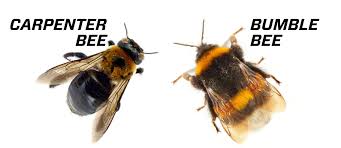
This time of year we start to see a lot of buzzing, flying insects. Some of them even look very similar. So which ones are a threat, and which ones aren’t? And how do you tell?
This post will cover the difference between Carpenter Bees and Bumblebees. Both insects look very similar, and very intimidating. The important thing to remember is both Bumblebees and Carpenter Bees are not necessarily harmful to humans, but Carpenter Bees can be very destructive.
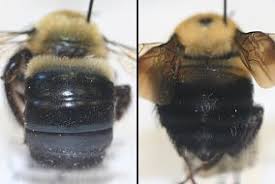
The first indicator of which buzz is which, is the fuzz. Both Carpenter and Bumblebees are fuzzy and black and yellow in color. If you take a closer look at the abdomen you will notice that Carpenter Bees have bare, shiny black abdomens, and Bumblebees have fuzzy, black abdomens. Both have yellow fuzz on their thoraxes and heads, but Bumblebees are a bit fuzzier.
Another important factor to consider in differentiating the two types of bees is noting where they are nesting. Bumblebees prefer to nest in the ground, while Carpenter Bees make their nests in wood. Bumblebees will build nests in shady, dry, low traffic areas with no direct sun exposure. According to one Bobvilla.com article, “Prime locations include underneath woodpiles, compost heaps, heavy brush, thick grass, or inside abandoned rodent holes and tunnels. Occasionally, the bumblebee queen will choose a spot underneath a shed, in a decaying log or tree stump, or even inside a bird nest or birdhouse for her colony’s home.” (Ullman, Michelle, June 18, 2021).

Carpenter Bees will build nests in wood; preferably untreated, weathered wood, but they will build nests in painted or new wood if a better option is not available. Carpenter bees will literally bore holes with their mandibles in the wood, creating tunnels that are used year after year, but do not actually eat the wood.

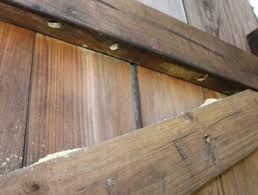
Both Carpenter Bees and Bumblebees are beneficial pollinators, but Carpenter Bees are destructive to wood structures. Their droppings also create an unsightly yellow stain around the areas they frequent. Now like honey bees, both Carpenter and Bumblebees have stingers, and can sting. Unlike honey bees, Carpenter and Bumblebees have smooth stingers that allow them to sting multiple times without causing harm to themselves. However, neither of these bee types are considered aggressive, and will generally leave you alone as long as you don’t swat at them, or threaten them or their nests. If one does sting you, it is most likely a Bumblebee, as they are more protective of their queen.
Now that you know what you’re dealing with, what are your options for getting rid of these buzzy critters? Here are five natural ways to stop Carpenter Bees According to Old World Garden Farms:
- Staining or Painting- as previously mentioned, Carpenter Bees prefer bare wood
for nesting. Painting or staining wood surfaces will help deter Carpenter Bees
from nesting in your wood structures. - Citrus Oil- Many insects, including Carpenter Bees, do not like the scent of citrus
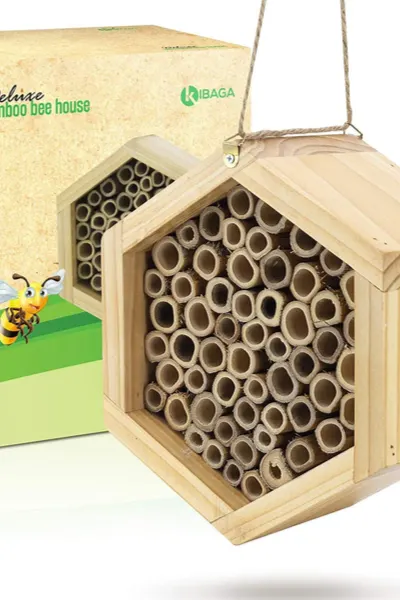
oil. Spray into newly bored holes, or apply to areas the bees may be attracted to. - Give them their own home, far away- Because Carpenter Bees are such
beneficial pollinators, creating a new home for them (far away from you own) can
help avoid issues. Simply hang the house where you see the bees hovering, and
after they nest in the house, move it to a different location. - Chimes and Vibration- Carpenter Bees do not like noise around their nests.
Installing a few wind chimes can help keep the bees at bay. - Plug Old Carpenter Bee Holes- Carpenter Bees will return to old holes and nests
year after year. Seal off any holes you can find to discourage bees from returning.
If you find that you are infested with Carpenter Bees, and the natural methods just aren’t doing the job, give us a call at (937) 772-7758 to schedule a free quote or to get started with your 365 Protection Package to cover your home and family from these and other invading pests. Call or text today!
References:
Oldworldgardenfarms, “How To Stop Carpenter Bees Naturally – 5 Simple Methods That Work!”, https://oldworldgardenfarms.com/2020/05/31/stop-carpenter-bees-naturally/, May 31, 2020, Accessed May 9, 2022.
Ullman, Michelle, “What’s the Difference? Carpenter Bee vs. Bumblebee”,
https://www.bobvila.com/articles/carpenter-bee-vs-bumblebee/, June 18, 2021, Accessed May 9, 2022.